
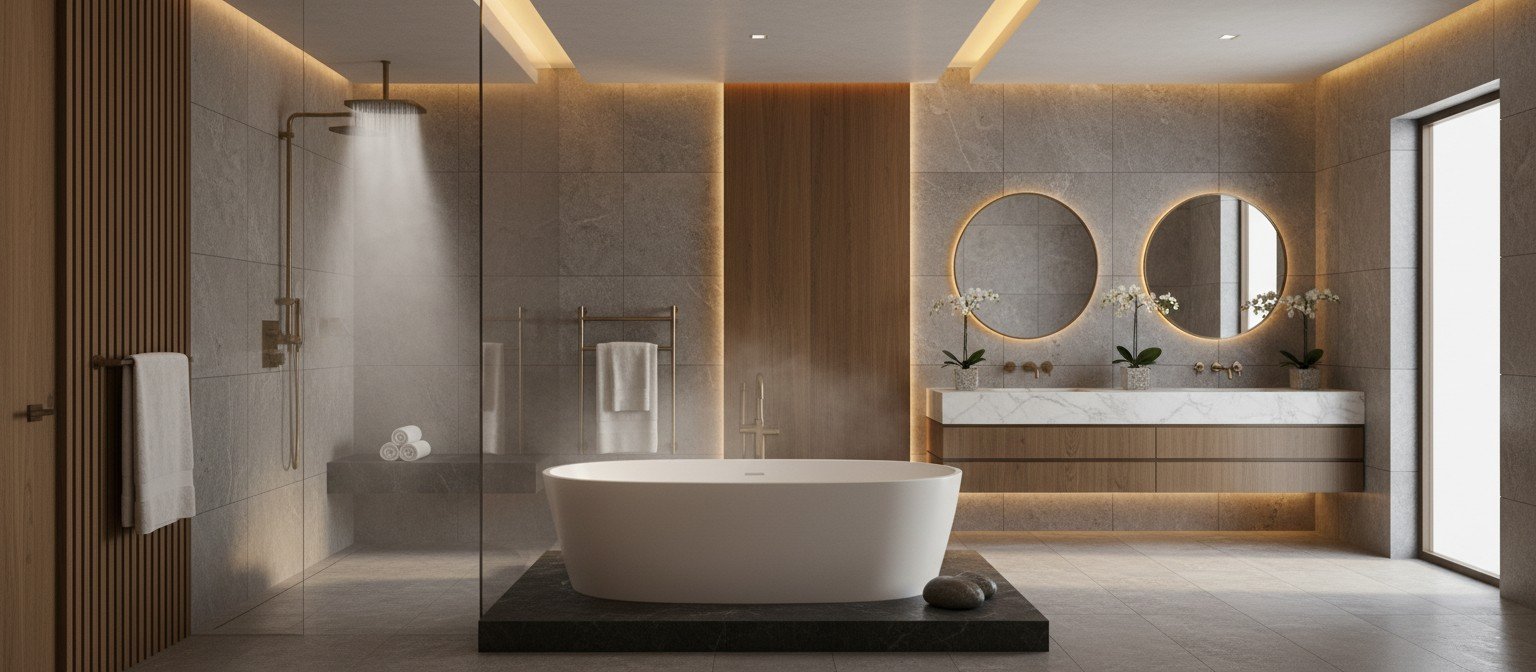
The bathroom has evolved from purely functional space to personal sanctuary, and hardware choices now carry the same weight as selecting kitchen appliances or living room furniture. Walk into any high-end hotel or newly renovated home, and you'll immediately notice the hardware—it sets the tone for the entire space. In 2026, certain finishes have emerged as clear leaders, each bringing distinct aesthetics and practical benefits. Understanding these trends helps you make choices that will feel current for years, not months.
Matte Black: The New Classic
Matte black bathroom fixtures have transcended trend status to become a modern classic. This finish delivers instant sophistication and works across virtually every design aesthetic, from ultra-modern minimalism to warm industrial farmhouse styles.
Why Matte Black Dominates
The appeal starts with versatility. Matte black fixtures create stunning contrast against white subway tile, complement natural wood vanities beautifully, and add necessary definition to all-white or neutral bathrooms. The finish provides visual weight without overwhelming smaller spaces—a trick that chrome or polished finishes can't match.
From a practical standpoint, matte black hides water spots and fingerprints far better than shiny alternatives. In hard water areas, this advantage becomes significant. Daily maintenance involves simple wiping with a microfiber cloth, while deeper cleaning requires only mild soap and water. Avoid abrasive cleaners that can damage the finish, but with normal use, quality matte black fixtures maintain their appearance with minimal effort.
However, matte black requires thoughtful application. Too much black in a small bathroom without adequate natural light can feel oppressive. The solution isn't avoiding black entirely—it's using it strategically. In compact bathrooms, limit matte black to faucets and shower fixtures, pairing them with lighter towel bars and accessories. Conversely, spacious bathrooms with good natural light can embrace comprehensive matte black hardware without feeling dark.
Durability Considerations
Not all matte black finishes are created equal. Premium physical vapor deposition (PVD) finishes resist scratching, tarnishing, and corrosion far better than powder-coated alternatives. When investing in bathroom hardware, verify the coating method. PVD finishes cost more upfront but maintain their appearance through years of daily use, while cheaper coatings can show wear within months in high-use environments.
Brushed Brass and Gold: Warm Luxury Returns
After decades in the wilderness, warm metal finishes have returned with sophistication that makes their 1980s ancestors look gaudy by comparison. Modern brushed brass and champagne gold fixtures bring organic warmth that perfectly balances the cool minimalism dominating contemporary design.
The New Warmth
Today's brass finishes bear little resemblance to the shiny, yellow-toned brass of previous eras. Contemporary brushed brass features subtle, natural-looking patina and muted tones that read as sophisticated rather than flashy. Champagne gold and brushed gold finishes offer even more subtlety, providing warmth without the traditional brass color.
These warm finishes excel in specific contexts. Bathrooms with extensive white or gray marble benefit enormously from brass accents—the warmth prevents the space from feeling sterile or cold. Similarly, bathrooms featuring warm wood tones, whether in vanities or wall treatments, achieve cohesion when brass fixtures echo those organic warmth tones.
The relationship between brass fixtures and lighting deserves special attention. Brass catches and reflects light differently than matte black or chrome, adding subtle visual interest as lighting changes throughout the day. This quality makes bathrooms feel more dynamic and lived-in rather than showroom static.
Maintenance Reality
Brass requires more maintenance than matte black but less than chrome. Water spots show on brass, particularly hard water deposits in areas with mineral-rich water. Plan on weekly cleaning with brass-specific cleaners or a vinegar-water solution. Never use abrasive scrubbers—they scratch the finish and accelerate tarnishing.
Living finishes—brass that develops patina over time—appeal to some homeowners but horrify others. If you prefer consistent appearance, choose sealed brass finishes that resist patina development. If you embrace the living finish aesthetic, understand that your fixtures will darken and develop character over years of use. Neither approach is wrong; it's purely preference, but know what you're choosing before installation.
Chrome: Timeless Simplicity
In the rush toward matte black and brass, chrome hasn't disappeared—it's refined its role. Chrome no longer tries to be everything to everyone. Instead, it occupies specific niches where its qualities shine.
Where Chrome Still Wins
Chrome remains the most budget-friendly quality finish option, making it ideal for rental properties or temporary bathrooms where you want decent appearance without premium investment. For homeowners, chrome excels in certain aesthetic contexts: ultra-modern minimalist bathrooms where high shine creates intentional drama, traditional or transitional spaces maintaining classic sensibilities, and bathrooms with chrome-heavy contexts like clawfoot tubs or vintage-inspired fixtures.
Chrome's reflective surface amplifies light, making it valuable in dark bathrooms or powder rooms without windows. The shine brightens the space in ways matte finishes simply cannot achieve. This quality makes chrome particularly effective in basement bathrooms or interior bathrooms relying entirely on artificial light.
The Maintenance Trade-off
Chrome's greatest weakness is also its defining characteristic: that brilliant shine shows everything. Water spots, fingerprints, soap residue—all announce themselves on chrome finishes. In households with hard water, chrome requires near-constant attention to maintain that showroom appearance. Daily wiping becomes essential rather than optional.
For many homeowners, this maintenance burden outweighs chrome's benefits. However, if you actually enjoy the ritual of keeping things sparkling clean, chrome rewards that effort with unmatched brilliance. It's honest about what it requires—you simply need to decide if you're willing to provide it.
Brushed Nickel: The Safe Middle Ground
Brushed nickel occupies interesting territory—neither trendy nor outdated, neither warm nor cool, neither high-maintenance nor carefree. This versatility makes brushed nickel the Switzerland of bathroom finishes: neutral, reliable, and broadly acceptable.
Brushed nickel works when you need safe, crowd-pleasing choices. This applies to rental properties, homes being prepared for sale, or situations where household members have conflicting preferences. The finish complements virtually any color scheme and bathroom style without making strong statements. Its subtle texture hides water spots better than chrome while remaining easier to maintain than brass.
The downside of brushed nickel is precisely its safety—it lacks personality. In design, playing it safe often means playing it boring. If you're creating your dream bathroom, brushed nickel rarely appears in the vision. It's the sensible choice, not the exciting one. Sometimes sensible is exactly what you need. Other times, life's too short for sensible bathroom hardware.
Making Your Decision
Choosing bathroom hardware finishes involves balancing aesthetics, practicality, budget, and long-term satisfaction. Start by honestly assessing your bathroom's fixed elements—tile, countertops, flooring—that won't change. Your hardware should complement these permanent features rather than fight against them.
Consider your household's reality. Young children and hard water argue against chrome. If nobody enjoys regular cleaning rituals, matte black makes more sense than brass. Your bathroom should serve your life, not create additional work.
Think beyond current trends to personal preference. Trends cycle, but well-chosen fixtures last 15-20 years. Choose finishes you genuinely love rather than finishes Instagram loves this week. The most successful bathroom renovations reflect the homeowner's authentic taste rather than fleeting trend collections.
Finally, remember that hardware finish is just one element of successful bathroom design. Thoughtfully chosen fixtures in any quality finish outperform trendy fixtures installed without consideration of the space as a whole. The goal isn't following trends—it's creating a bathroom that functions beautifully and brings you satisfaction every single day.